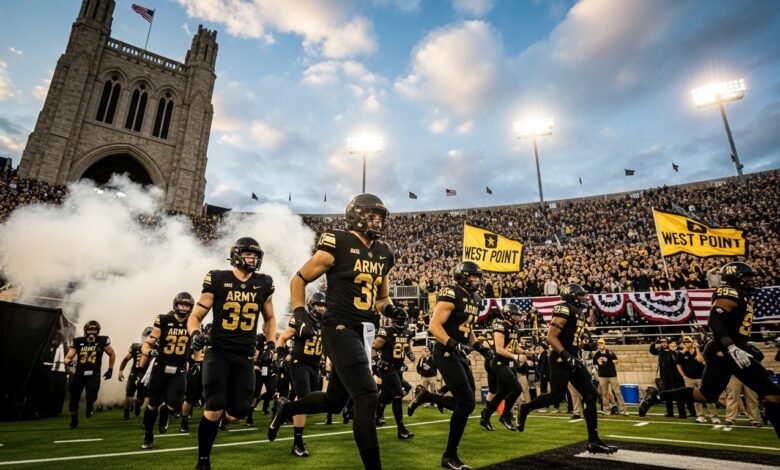
When most people hear the word “Army,” they think of soldiers, uniforms, or military missions. But for sports fans, especially college football lovers, one thing stands out—army football With its fierce rivalries, disciplined athletes, and historic wins, Army football is more than just a game. It’s a tradition built on pride, honor, and service.
Whether you’ve been a longtime fan or you’re just getting into watching college sports, this guide will walk you through everything you need to know about Army football. From team history and the famous Army-Navy rivalry to top players and unforgettable moments, we’ll cover it all.
Let’s dive into the exciting world of Army football and explore why this team—and the values it represents—means so much to players, fans, and the country.
What Is Army Football?
Army football is the college football team of the United States Military Academy, also known as West Point. The team, called the Black Knights, plays at the NCAA Division I Football Bowl Subdivision (FBS) level. Their games are filled with action, energy, and strong defense.
Players on the team are more than just athletes. They are full-time cadets who train to be future officers in the U.S. Army. Being part of the football team means waking up early for military training, attending classes, learning leadership skills, and still finding time to practice and compete at the highest level.
Army football players don’t just play for wins. They play for honor, teamwork, and the country.
A Quick History of Army Football
Army football started way back in 1890, and it didn’t take long to become one of the top teams. In the early 1900s, Army was already making headlines, and by the 1940s, the team was considered one of the best in the country.
In fact, the Black Knights won three national championships in the 1940s—in 1944, 1945, and 1946. Back then, under coach Earl “Red” Blaik, the team included famous players like Doc Blanchard and Glenn Davis, two Heisman Trophy winners.
Even though winning a national title in modern times is tough, Army football continues to play hard-nosed, competitive football that earns respect from fans and opponents alike. The legacy lives on.
The Army-Navy Game: A Rivalry Like No Other
Any talk about Army football has to include the legendary Army-Navy Game. It’s one of the most iconic and patriotic rivalries in all of sports.
Every year in December, Army takes on Navy in a game packed with pride and emotion. The winner gets bragging rights, cheers from the President, and usually the famous game ball trophy. This game is different from regular rivalries—it’s personal, powerful, and full of tradition.
Even people who don’t usually watch college football tune in for Army vs. Navy. March-ons, fighter jet flyovers, and cadet chants make the day unforgettable. And on the field? Tough players give everything they’ve got—mentally and physically.
To fans and alumni, winning this game means everything.
West Point: Home of the Black Knights
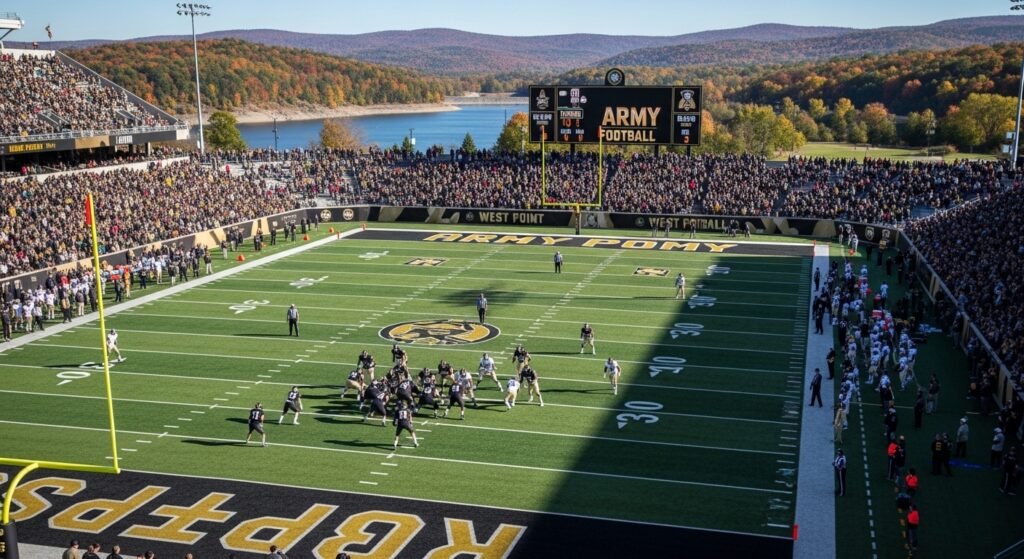
The heart of Army football is at West Point, the United States Military Academy in New York. The campus sits along the beautiful Hudson River and has trained military leaders since 1802.
Playing football at West Point is no small task. Cadets have busy schedules filled with academic studies, physical training, military work, and preparation for future leadership roles. But on top of that, football players hit the field and compete at a tough college level.
Games are played at Michie Stadium, one of the most scenic stadiums in the nation. The setting, combined with the marching bands and fan energy, makes watching Army football live a special experience.
The Triple-Option Offense: Army Football’s Signature Style
While many college teams throw the ball a lot, Army football sticks to a unique plan—the triple-option offense. This old-school strategy focuses on running the football over and over again, pounding away and wearing teams down.
The quarterback has three choices on most plays: hand it off, keep it, or pitch it to a running back. This style may seem simple, but it’s hard to stop when it’s run well. It helps control the clock, move the chains, and keep the other team’s offense off the field.
Army has mastered this playbook for years, and it often gives bigger, faster teams serious trouble.
Famous Army Football Players
Over the years, Army football has produced some incredible athletes—many of whom went on to serve their country and lead in other ways.
Here are just a few of the most well-known:
- Doc Blanchard (Mr. Inside): He won the Heisman Trophy in 1945.
- Glenn Davis (Mr. Outside): Another Heisman winner from 1946.
- Pete Dawkins: Won the Heisman in 1958 and became a decorated Army officer.
- Alejandro Villanueva: Star lineman who later played in the NFL and served overseas.
These athletes reflect the dual path of excellence and service that defines Army football.
Recent Army Football Success
In recent years, Army football has made a strong return to winning seasons and bowl games. Under former head coach Jeff Monken, Army became known for tough defense and physical play.
From 2016 to 2020, the team enjoyed some of its best seasons in decades, including:
- 11–2 record in 2017
- Winning the Commander-in-Chief’s Trophy, which goes to whichever military academy beats the other two (Navy and Air Force)
- Winning bowl games like the Armed Forces Bowl and Independence Bowl
This modern success proves that Army football is still competitive and focused—even without the biggest budgets or dozens of five-star recruits.
Who Coaches the Team?
As of recent seasons, Army football is coached by Brian Newberry, who replaced Jeff Monken in 2024. Newberry brings continued energy and discipline to the program, along with experience as a defensive coordinator.
Newberry and his coaching team focus on fundamentals, teamwork, and leadership. The player-first mindset helps cadets become better athletes—and future officers.
Coaching at Army is a special task. It’s not just about wins; it’s about building character, preparing soldiers, and showing what football is all about.
Players’ Life Off the Field
Army players live a different life than most college athletes. At West Point, every student (cadet) follows strict rules and schedules. Here’s what a typical day might include:
- Early morning physical training
- Morning classes
- Lunch in uniform
- Team meetings and practice in the afternoon
- Evening study time
There are no “off days.” Every cadet must follow a code of respect, discipline, and hard work. But through all this, Army football provides positive support, growth, and teamwork that helps these cadets succeed both on the field and as future Army leaders.
Army Football Game Day Experience
Watching a game at Michie Stadium is like nothing else. The setting is peaceful, but the energy is electric.
Before the game, cadets march into the arena in perfect formation. The bands play military fight songs, and flags wave proudly in the breeze. Fans wear black and gold, and the stands are filled with families, fellow soldiers, students, and alumni.
After every game, win or lose, the players stand at attention while singing the school’s alma mater. It’s an emotional and respectful moment, showing honor and unity—something that truly defines Army football.
How to Watch Army Football
If you want to catch Army football, it’s easier than ever. Games are often broadcast on ESPN, CBS Sports Network, or streamed online through platforms like ESPN+.
The annual Army-Navy Game always airs nationwide and is easy to find. If you’re near West Point, consider attending a game in person. The experience is unforgettable.
You can also follow updates, scores, and player stats online. The Army football website and social media channels provide great behind-the-scenes content, post-game reactions, and more.
Army in Bowl Games
Army football has played in several bowl games, especially in the last 10 years. These are special bonus games at the end of the season when teams meet certain winning standards.
Some of Army’s recent bowl victories include:
- 2016 Heart of Dallas Bowl (win vs. North Texas)
- 2017 Armed Forces Bowl (win vs. San Diego State)
- 2020 Liberty Bowl (close game vs. West Virginia)
These games help show the nation what Army football can do under the spotlight—and players often rise to the occasion.
FAQs
1. What division is Army football a part of?
Army football plays in NCAA Division I FBS and is an independent team, meaning it isn’t in a full-time conference.
2. Do Army football players serve in the military?
Yes, players (like all West Point cadets) must serve in the U.S. Army after they graduate.
3. Who are Army’s biggest rivals?
Army’s top rivals are Navy and Air Force, with the Army-Navy Game being the biggest of the year.
4. What offense does Army football usually run?
Army is known for the triple-option offense, a run-heavy formation with multiple ball carriers.
5. Has Army ever won a national championship?
Yes. Army football won national titles in 1944, 1945, and 1946.
6. How can I buy tickets to Army football games?
Tickets can be bought on the official Army sports website or through ticket partners like Ticketmaster.
Final Thoughts
Army football isn’t just about touchdowns, tackles, or trophies. It’s about commitment. It’s about representing something bigger than yourself. The athletes wear the uniform of more than just a team—they wear the uniform of a country.
Fans of Army football get more than just a good game. They get to see teamwork, effort, and pride in every play. From the historic wins of old to the renewed energy of today’s team, Army football stands as a symbol of what hard work and heart can accomplish.
If you’ve never watched an Army game before, make time this season. You’ll walk away with more than just a final score—you’ll leave inspired.